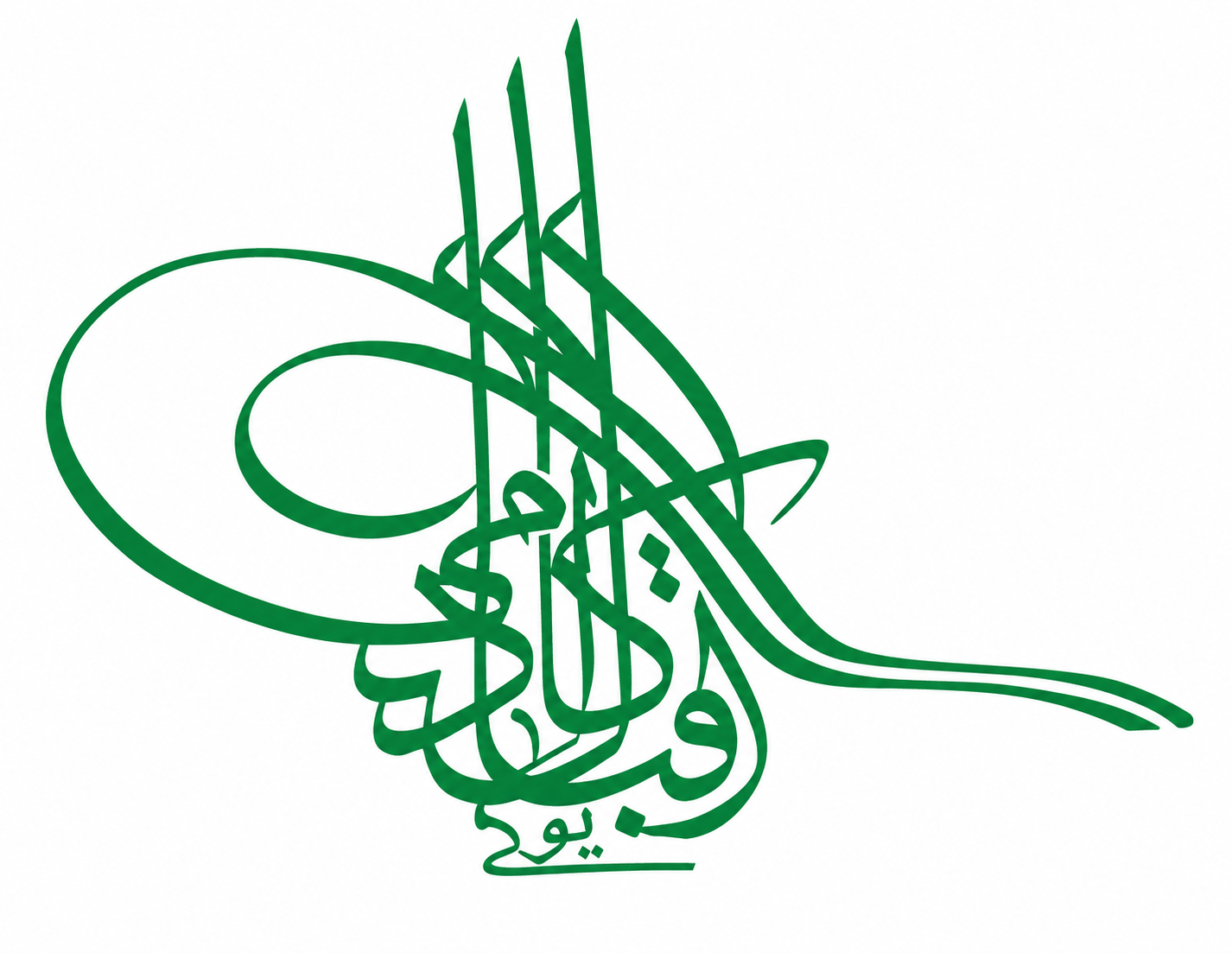
IQBAL
The Poet-Philosopher, Iqbal
Muhammad Iqbal may be numbered among the greatest literary and philosophical figures of the twentieth century. IQBAL belongs to the illustrious line of poet-philosophers exemplified by Rumi, Hafiz, Jami and Khayyam in the Islamic, and Dante, Milton and Goethe in the European, traditions. From all of these, however, he differs in one important respect. As a Western-educated Indian Muslim he was equally conversant with the philosophies of the East and the West. In the words of Hermann Hesse, the great German writer, he "belongs to three domains of the spirit or intellect, the sources of his tremendous work: the worlds of India, of Islam, and of Western thought."
Writing in 1946, Hesse called Iqbal "a joiner rather than a divider" — a man who praised the genuine strengths of both East and West while criticising, without flattery, the failings of each. It is this refusal to choose sides that makes Iqbal so unusual a figure, and so useful a one to a country in which the two traditions now live side by side.
As an eloquent writer and speaker, who was of academic distinction and equally at home with Urdu, Persian, Arabic and English, he was well qualified to interpret the East to the West and vice versa. This is exemplified by one of his early books of Persian poetry, Payam-i Mashriq (Message of the East: 1923), subtitled: In reply to the German Philosopher, Goethe — written as a direct answer to Goethe's West–östlicher Divan. It was that pairing of East and West that gave the Academy's own Millennium gala its focus and its name: Music of the East.
Thus it is that although Iqbal addresses his message first and foremost to the Muslims of the world, and particularly to his compatriots, he speaks to all of mankind.
"India, whose place in the world is too narrow, can ill afford to miss a poet whose poetry had such universal value."
Biographical note
Iqbal wrote his incomparably beautiful and moving poetry in both Urdu and Persian, and much of it is known by heart by millions of people in Pakistan, India, Iran and elsewhere. His philosophical writings in prose are mostly in English, the foremost of which is entitled The Reconstruction of Religious Thought in Islam (1930), one of the truly outstanding books on the subject ever published. He is remembered less as a poet who also philosophised than as a thinker for whom poetry was the vehicle of philosophy — the two inseparably linked — and he has been called the most serious Muslim philosophical thinker of modern times.
Allamah Dr Sir Muhammad Iqbal (1877–1938) was born in Sialkot, into a middle-class family, and was educated in both the Eastern and the Western traditions. He took an MA in Philosophy at Government College, Lahore, in 1899, began writing serious poetry at about the same time, and afterwards taught philosophy at the same college. A barrister, philosopher, poet and politician, he is widely regarded as the spiritual father of Pakistan and one of the most important Muslim thinkers of the modern era.
On hearing of Iqbal's death, his fellow-poet Rabindranath Tagore said that India could ill afford to lose him. His tomb in Lahore, beside the Badshahi Mosque, is today a national shrine.
The European years, 1905–1908
1905 — 1908In 1905, at the age of twenty-seven, Iqbal travelled to Europe for what became three formative years of study. He undertook graduate study at Trinity College, Cambridge, taking a BA with Honours in 1907; he took a doctorate at Munich with a dissertation on The Development of Metaphysics in Persia; and he was called to the Bar at Lincoln's Inn, London, in July 1908. He returned to Lahore that year to practise law, though his true calling remained poetry and philosophy.
These three years were the decisive turning point of his life, and they are the reason the Academy's work is rooted in Britain. Unlike many Westernised Muslims of his generation, exposure to European thought did not push Iqbal to reject his own tradition. It gave him the instruments with which to re-examine that tradition constructively — and to subject modern Western thought to precisely the same critical scrutiny.
In December 1930 he delivered his celebrated presidential address to the All-India Muslim League at Allahabad, articulating for the first time the idea of a separate homeland for the Muslims of India. He represented India at the Round Table Conferences in London in 1931 and 1932, travelling widely across Europe and the Middle East, and died on 21 April 1938.
A life in outline
1877–1938
- 1877
Born at Sialkot
Born on 9 November into a middle-class family, and educated in both the Eastern and the Western traditions.
Sialkot, Punjab
- 1899
MA in Philosophy
Graduates from Government College, Lahore, begins writing serious poetry, and later teaches philosophy at the same college.
Government College, Lahore
- 1905
Sails for Europe
Leaves for three years of study in England and Germany — the decisive turning point of his intellectual life.
Lahore — Cambridge
- 1907
Cambridge and Munich
Takes a BA with Honours at Trinity College, Cambridge, and a doctorate at Munich with a dissertation on The Development of Metaphysics in Persia.
Trinity College · Munich
- 1908
Called to the Bar
Called to the Bar at Lincoln's Inn in July, and returns to Lahore to practise law.
Lincoln's Inn, London
- 1923
Payam-i Mashriq
Publishes the Message of the East, written in direct reply to Goethe's West–östlicher Divan.
Lahore
- 1930
The Allahabad address
Delivers his presidential address to the All-India Muslim League, articulating for the first time the idea of a separate homeland for the Muslims of India. The Reconstruction of Religious Thought in Islam appears the same year.
Allahabad
- 1931
The Round Table Conferences
Represents India in London in 1931 and again in 1932, travelling widely across Europe and the Middle East.
London
- 1938
Death at Lahore
Dies on 21 April. His tomb, beside the Badshahi Mosque, is today a national shrine.
Lahore
Dates as recorded in the Academy's archive
Philosophy and influences
Iqbal remained in intellectual dialogue with his Cambridge supervisor, the philosopher J. M. E. McTaggart, long after he had left England, and drew freely on Bergson, Whitehead, William James and Dewey. He fused these with the Muslim tradition of Rumi, Ibn Khaldun, Ibn 'Arabi and al-Shatibi, and the result was The Reconstruction of Religious Thought in Islam — an attempt to think the inherited tradition through again, from the beginning, in the language of modern philosophy.
He admired Western science and technology, and condemned the imperialism, exploitation and moral emptiness he saw accompanying them. He admired the inner spiritual and intellectual heritage of the East, and criticised its complacency and its imitation of the West, urging it instead to look within. His resolution of the two was neither surrender nor retreat: the East, which has love, and the West, which has intellect, should combine to build a new world order — what he called an amalgam of love and intellect.
As early as the twelfth century Al Ghazali had written of the poetic and musical heritage that enriched the Islamic tradition. Kafi and qawwali represent that same Sufi mission of bringing different religions and cultures together through music. Amir Khusrau, at the court of Sultan Alauddin Khilji of Delhi (1296–1316), was the genius through whom this form of singing really developed and flowered: born to a Hindu mother and a Muslim Turkish father, he worked at the synthesis of Hindu and Muslim cultures, mixing Indian, Persian and Turkish musical modes into distinct mystical forms in which music is recognised as a means of attaining spirituality. It is in this tradition that Iqbal's own verse is still sung.
In his own words
In translationIqbal wrote in Urdu and in Persian. The lines below are given in English translation; the Academy's library holds the originals, and translations of the Javid Nama, Asrar-i Khudi, Gulshan-i Raz-i Jadid and the Rumuz made by its Chairman.
I have spoken two words according to the temper of my times:
I have enclosed two seas within a pair of vessels.
I am a stream that originates from two seas…
My spirit is a parting and withal, a union, too.
Rise, and draw the blueprint of a new world
Go, and make an amalgam of love and intellect.
Man without work, and woman without a child…
Is this the zenith of your civilization?
Do not court the favours of the glassblowers of the West —
Make thy wine-jars and goblets from thine own Indian clay.
Q.M. HAQ, M.I. WALEY and S.A. DURRANI